Diapositivas del curso Lenguas de España: viaje por un patrimonio cultural inmaterial (Programa interuniversitario para los mayores de la Comunidad de Madrid, 2º semestre 2025)
Consulta protegida por contraseña (solo para matriculados)
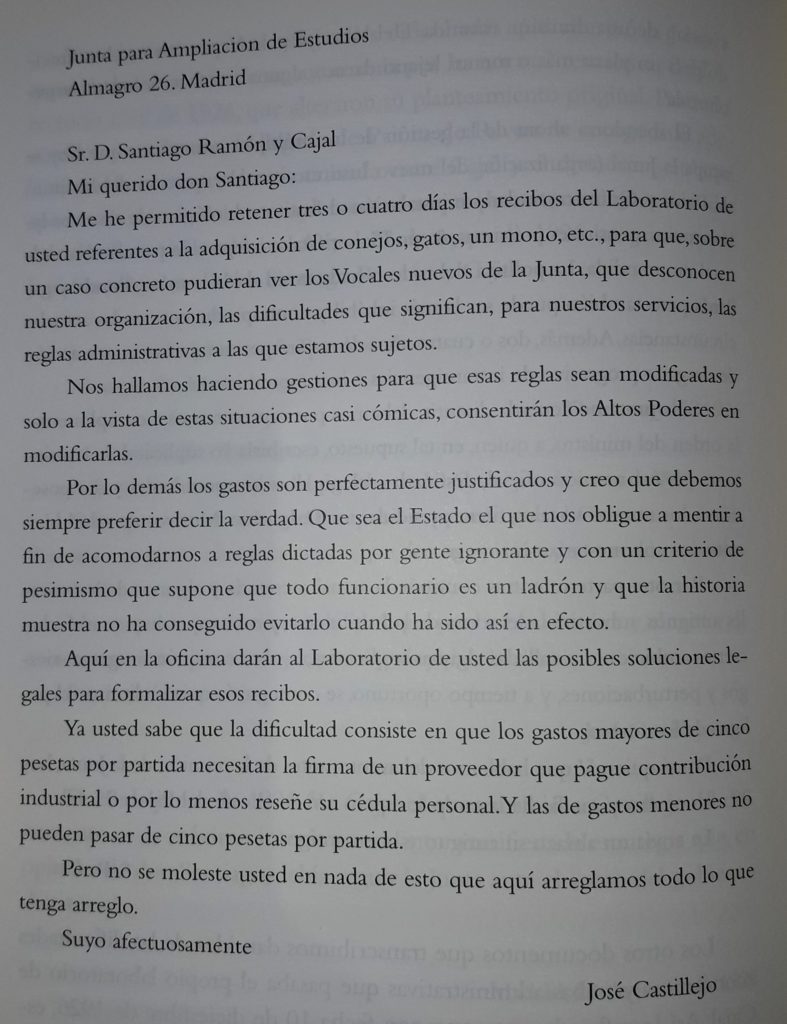
La casa donde vivió el matrimonio compuesto por María Goyri una de las primeras mujeres en ir a la universidad, doctora en filología y pedagoga de vocación y el filólogo e intelectual Ramón Menéndez Pidal es ahora una fundación donde podemos encontrar en ella grandes tesoros que debemos preservar.
Jesús Antonio Cid Martínez presidente de la Fundación Ramón Menéndez Pidal
Álvaro Piquero Rodríguez profesor Literatura, UNED
Juan Piquero Rodríguez profesor Filología, UNED
Elena Gallego historiadora
Inés Fernández Ordoñez miembro Real Academia de la Lengua
Sara Catalán bisnieta María Goyri y Ramón Menéndez Pidal
Mayte Linares Gómez del Castillo, guion, realización y locución
Yo, que yá nun creo no qu’escribo, que miento cuando digo’l xeitu de lo qu’importa, yo, a los ventimunchos años de la mio vida, n’Uviéu declaro que tienen razón les coses qu’escapen, el fumo del tabaco, l’aire que respiro, la vida qu’afuxe de les mios manes con vocación d’agua nun cestu. Yo, que tengo fríu esta nueche y adevino allá llonxe, apartada, la lluz nuna ventana que nun m’espera, yo tengo fecho tolo que quixi y tengo fecho tolo que nun quixi, yo tengo allende lo incierto, aquende la señaldá. En silenciu tengo pensao nel silenciu. El silenciu azarientu y pensatible, cruel cuando dalquién espera una palabra mía (yo nun pienso en nada. miro al techu y apigazo y suaño imposibles vides que sobreentiendo). En silenciu tengo pensao en ti, y en ti tamién, mio vida, porque te pierdo y canto aquello qu’esperaba tener y nun tengo. Yo conozo la lluz nuna ventana, de nueche, y el ser que s’abriga nesa lluz, tan duce y roxa como la lluz del sol nel trigo. Yo conozo la cobardía de los años y el pie que tropieza nes alfombres y el ser inoportún, a desora, qu’entra en mi y yá nun quier salir nunca. Yo, Xuan Bello, que tengo gastao la vida lliendo llibros, que quixi vivir pa esti llau del espeyu (equí yá nun había vida), yo, que conozo’l mar polo qu’escribo y la lluz del día polo qu’otros tienen escrito, yo fui feliz y fui infeliz, quixéronme y quixi con un amor qu’entrellaza miraes y conceptos.
Harris does this readily. In an address in Atlanta responding to “Lock him up” calls about Donald Trump, she said, “The courts are gonna handle that,” later working up the crowd by referring in pep-talk style to “Novem-buh.” In a speech in Michigan she mentioned that “We have fun doin’ hard work.” Some of her switching is simply to good old colloquial American — gonna, doin’ — but at other times, especially for heavily Black audiences like the one in Atlanta, she switches into Black English: “Novem-buh”; “foah” for “four.”
A lot of people think there is something wrong with her doing this. “Harris seems to put on an accent for Atlanta rally,” read one chyron on Fox News. One take on X, typical in its tone on the issue, displays familiarity with the term “code-switching” but frames it as a cynical act: “Code switching is a convenient way to describe blatant pandering.” Of course Trump has joined in asking “Did you hear a new accent?” with his running mate, JD Vance, right behind him claiming that Harris is using a “fake Southern accent.”
First of all, Harris is not doing a “Southern” accent. She is not summoning Jeff Foxworthy, the comedian Fortune Feimster or Rue McClanahan’s Blanche Devereaux. What people are hearing as Southern is Black English with which white Southern English overlaps only partially. Black English has a great many traits alien to white Southern.
More to the point, language is about reaching into another mind. It’s about connecting. Code-switching is one of the ways that humans use language to connect. Using the colloquial dialect of a language serves the same function as drinking or getting a mani-pedi together. It says, “We’re all the same.” It is especially natural, and common, when seeking connection about folksier things or summoning a note of cutting through the nonsense and getting to the heart of things in a “Let’s face it” way. This is why many of us readily say “Ain’t gonna happen” even if we aren’t given to saying “ain’t” regularly.
In a global sense, Harris’s code-switching is completely ordinary. Many people from other countries would be perplexed about anyone thinking her code-switching is remarkable, much less offensive. It is president Gamal Abdel Nasser of Egypt in the 1950s and 1960s sprinkling Egyptian Arabic, a colloquial variety, into his speeches that were mainly in the standard variety. It is a restaurant sign in Bavaria that starts out in standard German for “Eating is a need but enjoyment is an art,” but then glides as a “P.S.” into Bavarian dialect to say “Drum schaugst a bissl rei zu uns!” — “So take a little look-in at our place!”
Closer to home, Maya Angelou deftly explained how Black Americans code-switch when she wrote: “We learned to slide out of one language and into another without being conscious of the effort. At school, in a given situation, we might respond with, ‘That’s not unusual.’ But in the street, meeting the same situation, we easily said, ‘It be’s like that sometimes.’”
It is in this light that we must evaluate an X post like “It’s pretty weird to change your accent on the fly depending on which audience you’re speaking to.” Wrong. This is like saying it’s pretty weird to dress according to what your plans for the day are.
VOT-PEL-JIC-RUD. VOT-RUD-JIC-TAM. These aren’t word puzzles or acronym-making gone mad. Though the words are meaningless, they are sentences in a language—one of perhaps hundreds of miniature artificial languages that language scientists have created for their research. These mini-languages are to real languages what Matchboxes are to real cars. You won’t find them spoken on the street or written online.
They are, however, useful simulations used in laboratories that show how humans learn languages in all their varied forms. Such research seeks to understand how we learn the linguistic significance of patterns in speech: where do words begin and end? What are the important words in a sentence? Which parts of language are learned first? How do babies and adults learn languages differently?
Looking for linguistics and language-related films to watch? Mary Ann Walter, a linguist who runs a linguistics film series at Middle East Technical University, Northern Cyprus, has kindly forwarded her very extensive list of linguistically-relevant movies, documentaries, and episodes of TV shows, and given me permission to post it. I have only watched some of these movies and have only very lightly edited Mary Ann’s notes, so I cannot vouch for all of them, but I hope this list is helpful to people! If you know of any linguistically-relevant films that we’ve somehow missed, do add them in the comments. Asterisks indicate ones that are available on youtube. Sci-fi/speculative Arrival, 2016
Star Trek Darmok episode, 1991.
Pontypool. 2008. Horror. In a Canadian town, the English language somehow gets infected and makes them zombies. The Falls. 1980. Mock documentary about something which killed many and left others with strange symptoms, including suddenly speaking new languages.
*Het Dak van de Walvis (On Top of the Whale) 1982 Raoul Ruiz. Parody of much of western academia. A group of field linguists set out to study an exotic language which consists only of one single word, which therefore means everything. Very strange, not a crowdpleaser. Being John Malkovich. Also features a single word language. English/Regional *Do you speak American (3 episodes, each 1 hour).
*Talking Canadian (43 minutes). Difference between Canadian and US English.
Road Scholar (1993) directed by Roger Weisberg. US Poet and NPR commentator takes a road trip across the US shortly after getting his driver’s license after being a pedestrian for twenty years. Language and region are foregrounded. Also features some American language and culture. American Tongues, 1987.
*The Story of English (10 episodes, each 1 hour).
*The Adventure of English (2003, BBC, 8 episodes, each 1 hour).
Trainspotting. For Scottish English. Riff Raff (1991) directed by Ken Loach. UK. This film about a group of construction workers features working class dialects. What was significant about the film is that it had English language subtitles for English speaking audiences.
Inferiority English Vinglish.
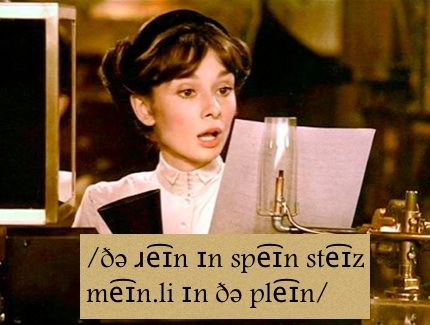
*My Fair Lady. 1964.
*Pygmalion. 1938.
Pygmalion 1983, starring Peter O’Toole.
Singing in the Rain. 1952.
Indigenous and Language Endangerment *Linguistics and Human Rights. 1 hour. With Michel de Graff.
*Why should we protect endangered languages? Nicholas Ostler. 47 min.
Our spirits don’t speak English. (Native boarding schools in the U.S.)
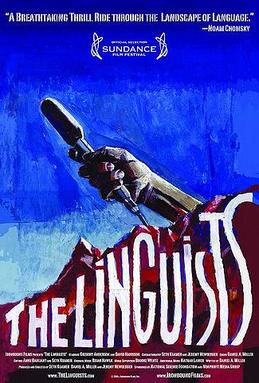
The Linguists. (Gregory Anderson and K. David Harrison).
Vanishing Voices. PBS documentary.
Language Matters. 2015. Also PBS.
*We still live here. PBS on Wampanoag. 2011.
In languages we live. 2005. Danish and English.
Finding our talk. 2001. Canadian series on their Indigenous languages, experiences and revitalization efforts. 26 half-hour episodes.
Ga-du-gi. 2005. On Cherokee.
*The Hawaiian language shall live. 1997. 28 min.
More than words. 1996. Eyak Alaskan lang. 50 min.
Huchoosedah: traditions of the heart. 1995. 60 min. Lushootseed.
Transitions: destruction of a mother tongue. 1991. Blackfoot, 30 min.
Ultima palabra/last word, 2003. Mexico.
*Son sesler/last voices 1987. On Ubykh, in Turkish, 27 min.
*Rising Voices: Revitalizing the Lakota Language. 1 hour.
*Where the Spirit Lives, 1989. On Canadian residential schools of 1930s. Ten canoes. 2006. Aboriginal elder tells story on a hunt. Yolngu boy. 2001. Three Aboriginal adolescents set off for advice on court case from elder. Rabbitproof fence. 2002. 3 Aboriginal girls taken from home to be maids, try to return. ‘Black and White’, 2002, a ‘based on a true story’ Australian film featuring a storyline where the defence argues that a ‘confession’ presented to the court in Standard Australian English shouldn’t be admitted as it was highly unlikely that this was an accurate representation of what the Aboriginal defendant could have produced. It even features the linguist Strehlow (big name in early Australian linguistics, and anthropology) as an expert witness. Nirgendwo in Afrika (Nowhere in Africa). It has nice illustrations of bilingualism/multilingualism, code-switching, and child L2 acquisition. Jewish family moves to Africa in 1930s. Nigerian pidgin opera. 1 hour long. Can watch it streaming from the internet, but no subtitles, not possible to follow words. Windtalkers 2002 John Woo. Navajo code talkers in WW2. Picture Bride. 1994. Hawaiian Pidgin English. *Black Robe. 1991. Algonquian language in the 17th/18th century. The Harder they Come. 1973. director: Perry Henzell. Lots of Jamaican creole. *Stepping Razor Red X. 1992. director: Nicholas Campbell. Documentary with Jamaican Creole. *Life and Debt in Jamaica. Feral languages, Acquisition
Dogtooth 2009. Greek film about children are kept isolated by their parents, lots of violence and sexual abuse, not appropriate for most audiences.
*The enigma of Kaspar Hauser. Herzog, 1974. (On youtube but only in German, no subtitles).
Nell. 1994. Another feral child movie, starring Jodie Foster.
Mockingbird Don’t Sing. 2001. Also on Genie, just with names changed.
Animal communication *Project Nim. 2011. On the chimp/language attempt.
The Jennie Project 2001 Gary Nadeau. Two anthropologists adopt a chimp, raise it with their own children, and teach it American Sign Language. Can rent streaming from Amazon but on own laptop ($3) *A conversation with koko the gorilla. PBS doc. 1 hr. 1999.
Koko: A talking gorilla. 1978. Documentary.
Koko: The gorilla who talks (to people). 2016 BBC/PBS 1 hr.
*Kanzi: An Ape of Genius. 1993. In 4 parts on yt, total 1 hr.
Kanzi: Communicating apes. 13 min clip on yt of Natl Geographic show.
Human Ape. 2008. National Geographic 2 hour program. More general than just language, but includes it, as well as Kanzi. On yt but in 10 parts of 10 min each.
*Sue Savage-Rumbaugh 20 min TED talk on bonobos. (not only language).
*First Signs of Washoe. Nova season 1 ep 10. On yt in 2 parts. Total 1 hr.
Dolphins. 2000 imax movie. 40 min.
*The Girl who talked to dolphins. 2014. BBC, 1 hour. She lived with it and spoke English. Can supplement with something short like those below.
*Dolphins: Even smarter than you thought. 2015 Natl Geo, 16 min only, but shows interactive chat tech.
Inside the animal mind, BBC 2014, secrets of the social world, 20 min segment on dolphins. V. good.
*Nova science now: How smart are dolphins. 2014. 11 min, Neil deGrasse Tyson.
Denise Herzing TED talk, could we speak the language of dolphins.
*In the wild with Robin Williams: Dolphins. 1994. 1 hour national geographic episode. Includes Akeakamai, the dolphin who learned to follow gestural syntax.
*BBC wildlife on one, dolphins: deep thinkers, 2003, ½ hour episode.
Deafness and Sign Language *Sound and Fury, 2000. 80 min. Family debate over cochlear implant.
*Sound and Fury: 6 years later.
*The Heather World, TEDx talk, 13 min, by child from Sound and Fury
*TED talk by Rachel Kolb, 16 min, navigating deafness in a hearing world.
*Keith Nolan, TED, Deaf in the military.
*Life and Deaf, 2016, BBC documentary, one hour.
*For a Deaf Son, 2013 PBS doc, one hour.
*Bridge to Silence, 1989, a woman rejoins theater of the Deaf after an accident and quarrels with her mother.
*Through Deaf Eyes. NEH documentary, 2 hours.
Speechless. 2014. Documentary about aphasia.
*The Miracle Worker. 1962. Helen Keller and Anne Sullivan. Also 1979 and 2000 versions.
*Black (2005) Hindi movie, woman who can’t hear, see or talk. Inspired by Keller. Full 2 hrs. Can be watched online: http://www.hindilinks4u.to/2007/06/black-2005.html Disordered speech Help me to speak. Stuttering. The King’s speech. Stuttering too, early speech therapy, Colin Firth. Still Alice. 2014. Linguistics professor with early onset Alzheimer’s, lexical loss. Julianne Moore.
Speechless. 2016. Television show about a cerebral palsy kid (and his family) who can’t speak. Comedy.
The Sullivanish teacher ends up w/Alzheimer’s himself, incl speech probs.
2013 Turkish remake! Benim Dunyam.
Behind the Lines/Regeneration, 1997, about PTSD-related elective mutism. (WWI poets)
Regarding Henry, 1991. Some speech pathology after brain injury (gunshot).
Rocket science, 2007. High school stutterer joins debate team. Coming-of-age, kind of inappropriate.
*Open Door: Aphasia, interviews w/NZ patients, 30 min.
*Inside Aphasia, 3 parts, 20 min. Both kind of boring.
Other Tom Stoppard’s plays Dogg’s Hamlet and Cahoot’s Macbeth, especially the former, are written in a version of English in which the words are all normal but have completely different meanings. Ball of Fire, 1941. A group of ivory-tower lexicographers realize they need to hear how real people talk, and end up helping a beautiful singer avoid police and escape from the Mob. Cooper and Stanwyck. The grammar of happiness. 2012. Dan Everett and Pirahã.
Nu Shu: A hidden language of women in China. 1999. Really about a writing system, not language, but interesting. 59 minutes only. Camouflage. 1977. Action revolves around a linguistics summer school. Polish.
The Enigma of Kaspar Hauser / Jeder für sich und Gott gegen alle (1974)
On Top of the Whale / Het dak van de Walvis (1982)
The Wild Child / L’enfant sauvage (1969)
Truly, Madly, Deeply (1990)
The Miracle Worker (1962)
The Linguists (2008)
The Grammar of Happiness (2012)
The Passion of the Christ (2004)
Apocalypto (2006)
The Interpreter (2005)
Last of the Mohicans (1992)
The Sleeping Dictionary (2003)
BONUS MOVIES: Other movies suggested by readers:
Still Alive (2014) Arrival (2016) The 13th Warrior (1999) (famous for this scene where Antonio Banderas learns Old Icelandic by «listening»): Link to YouTube Video Spanglish (2004) Dances with Wolves (Kevin Costner learns Lakota) Bon Cop, Bad Cop (2006) (showcases Quebec French) Babel (2006) (movie with four stories each filmed in a different language) Oscar (1991) (dialectologist asked to teach proper language) Chan is Missing (1982) (includes a lecture on sociolinguistics) A Thousand Clowns (1965) (features a man who can identify dialects)
With the advancement of cognitive neuroscience and neuropsychological research, the field of language neurobiology is at a cross-roads with respect to its framing theories. The central thesis of this article is that the major historical framing model, the Classic “Wernicke-Lichtheim-Geschwind” model, and associated terminology, is no longer adequate for contemporary investigations into the neurobiology of language. We argue that the Classic model (1) is based on an outdated brain anatomy; (2) does not adequately represent the distributed connectivity relevant for language, (3) offers a modular and “language centric” perspective, and (4) focuses on cortical structures, for the most part leaving out subcortical regions and relevant connections.